Essential AI Shifts for Shopify Ecommerce Strategies in 2025
November 3 2025
Discover the latest consequential shifts that matter this month for marketing leaders and growth teams. From conversational commerce in Google and Chat GPT to search ad personalization with Meta AI, the implications are immediate for acquisition, retention, and measurement. We will keep the focus on what has changed and why it matters for marketers.
Ecommerce Advertising Strategies: Towards AI Conversational Marketing
The headlines are clear. Search is reshaping globally around AI. Major platforms are tapping AI interactions for personalization and ads in new ways. Below, we unpack these developments and connect them to practical next steps for marketers.
How OpenAI Transforms ChatGPT into a Shopping Platform with Instant Checkout
The headlines are clear. Conversational AI is becoming a shopping and ad surface. Search is reshaping globally around AI Overviews. Frontier models crossed new thresholds in reasoning, software creation, and multimodality. Affordable AI hardware is arriving on desks, not only in data centers. And major platforms are tapping AI interactions for personalization and ads in new ways that raise fresh governance questions. Below, we unpack these developments and connect them to practical next steps for marketing and growth teams.
OpenAI has launched Instant Checkout, a groundbreaking feature allowing U.S. ChatGPT users to purchase products directly within the chat interface without leaving the conversation. This marks a significant evolution in AI-powered commerce, turning ChatGPT from a recommendation tool into a full shopping platform.
What’s New
The feature is currently available to U.S. ChatGPT Plus, Pro, and Free users, initially supporting single-item purchases from over a million U.S. Etsy sellers, with Shopify merchants including brands like Glossier, SKIMS, Spanx, and Vuori coming soon. When users ask shopping-related questions, they can now complete purchases by tapping a “Buy” button and confirming order, shipping, and payment details—all without leaving ChatGPT.
Key Features for Users
Organic search results: Product results are organic and unsponsored, ranked purely on relevance to the user OpenAI
No extra costs: The service is free for shoppers with no added fees
Streamlined checkout: Plus and Pro subscribers can save payment and shipping details for faster purchases
Multiple payment options: Users can pay with credit cards, Apple Pay, Google Pay, or Link by Stripe
What This Means for Merchants
Sellers keep full control of their payments, systems, and customer relationships, serving as the merchant of record throughout the purchase journey.
Google Expands AI Mode
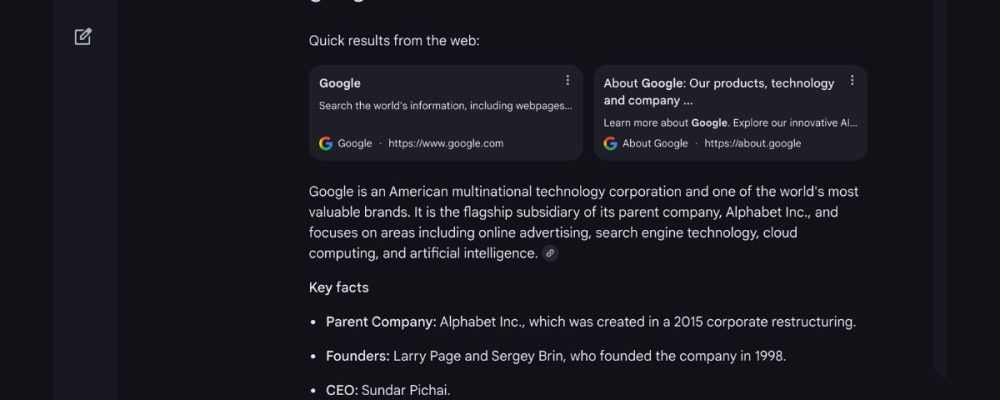
On October 7, 2025, Google announced AI Mode expansion to more than 35 new languages and over 40 additional countries and territories, bringing total availability to over 200 territories. At the core of AI Mode is Gemini 2.5, which processes text, images, audio, video, and code, enabling it to handle diverse inputs and features advanced reasoning capabilities that allow it to analyze information, draw logical conclusions, and incorporate context before responding to queries.
Implications for marketers:
SEO and content strategy: More complex, visual, and how‑to queries will surface Google AI Overviews and AI Mode. Inline links still drive traffic, but earning citation becomes a new optimization layer. We recommend optimizing structure content for authority and extractable snippets.
SEM placements: Ads appear within or alongside AI-generated summaries on desktop, with formats including Search ads and Shopping ads. Make sure to monitor CTR, CPA, and incremental lift within AI experiences, as summary-aligned creative may outperform traditional copy.
Meta Integrates AI Interactions Into Ad Personalization Engine
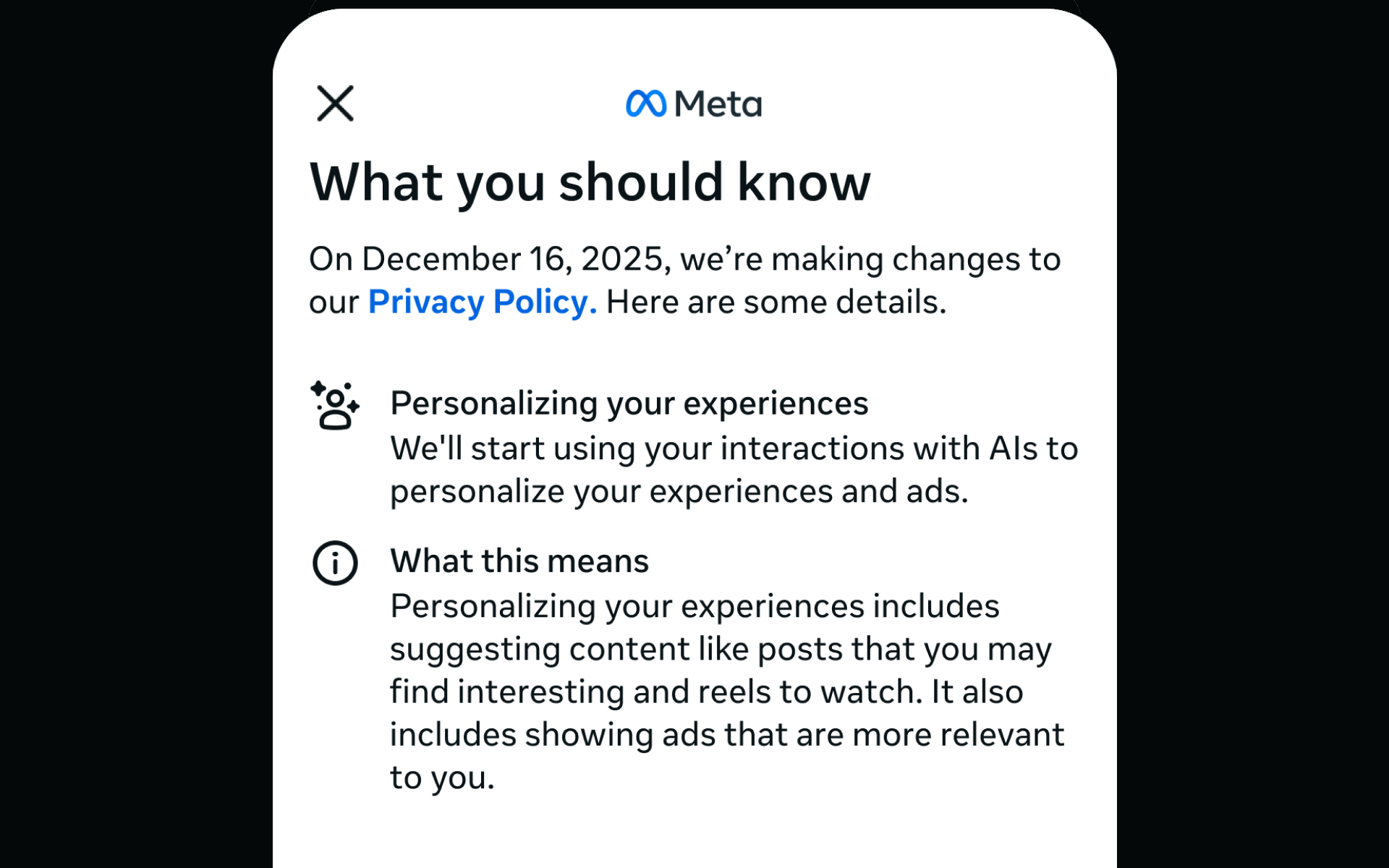
More than 1 billion people use Meta AI every month, and starting December 16, 2025, Meta will use interactions with its AI features to personalize content and ads across Facebook, Instagram, and other platforms. The company began notifying users about this change on October 7, 2025, with the new system taking effect on December 16, 2025.
How It Works
Whether through voice chat or text exchange with Meta’s AI features, interactions will help improve recommendations so users are more likely to see content they’re actually interested in and less of the content they’re not. Under the update, interactions with Meta AI—whether through voice or text—will be utilized much like how the platform currently tracks likes, shares and posts to determine user interests and what ads will have the highest potential impact.
For example, if someone chats with Meta AI about hiking, they may learn the user is interested in hiking—just as they would if the user posted a reel about hiking or liked a hiking-related page, and as a result, the user might start seeing recommendations for hiking groups, posts from friends about trails, or ads for hiking boots.
Privacy Controls and Limitations
When people have conversations with Meta AI about topics such as their religious views, sexual orientation, political views, health, racial or ethnic origin, philosophical beliefs, or trade union membership, Meta does not use those topics to show them ads.
Implications for Marketers
Enhanced Audience Targeting: The platform’s Advantage+ sales campaigns already boost return on ad spend by an average of 22%, while backend AI innovations improve ad conversions by up to 5%—the addition of AI interaction data could further enhance these performance metrics by providing deeper insights into user interests and intent.
Campaign Strategy Adjustments: Marketers should create flexible ad content that matches common questions people ask AI, like comparisons, how-to guides, or buying tips, and have 4:5 and vertical video versions ready for Reels and other discovery areas where recommendations work best. Consider testing broader campaign setups like Advantage+ that can leverage these more detailed signals.
Key Takeaways for Ecommerce Advertising Strategies this Month
AI is no longer a bolt‑on tool, it is the interface, the curator, and increasingly the checkout. Teams that align their data, content, and audience strategies to AI‑native experiences will compound advantages in ROAS, LTV, and retention over the next quarters.
If you want help turning these developments into a concrete action plan, or if you are exploring predictive audiences, first‑party data activation, and Shopify‑to‑ads syncing without heavy engineering lift, explore how Kuma can help.
FAQ – Everything You Need to Know About AI Developments for Marketers
How do AI Overviews change SEO tactics?
Prioritize authoritative, well‑structured content with clear schema and concise, quotable explanations. Your goal is to be cited in the Overview. Track traffic from inline links and Overview citations, not just traditional rankings.
Should we advertise inside AI Overviews and conversational surfaces?
Yes, test placements and creative tailored to summary‑style contexts. Monitor CTR, CPA, and incremental lift specifically within AI experiences, and compare to traditional SERP and feed benchmarks.
How can Kuma help without heavy engineering?
Kuma builds predictive and custom audiences from your Shopify data, syncs them to major ad and CRM platforms in one click, analyzes performance across AI‑affected surfaces, and provides an internal chatbot for safe, data‑driven planning.